FAQs
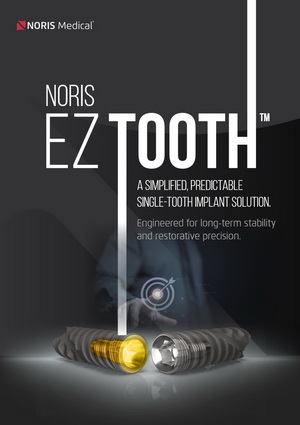
Noris EZTooth™ is a single-tooth implant solution designed to support predictable treatment from planning and surgical placement to the final restorative outcome. It is presented as a simplified, clinically driven workflow focused on long-term stability and restorative precision.
Why is single-tooth implant treatment considered clinically challenging?
According to the page, single-tooth cases require a very high level of precision because even small deviations can affect both function and esthetics. The content also highlights the need to balance primary stability, bone preservation, and soft-tissue esthetics in each case.
What are the main stages of the Noris EZTooth™ workflow?
The page presents EZTooth™ as a system built around 3 fully integrated stages: the implant, the surgical protocol, and the restorative solution. These are designed to work together as one coordinated single-tooth treatment concept.
Which implant platforms are included in Noris EZTooth™?
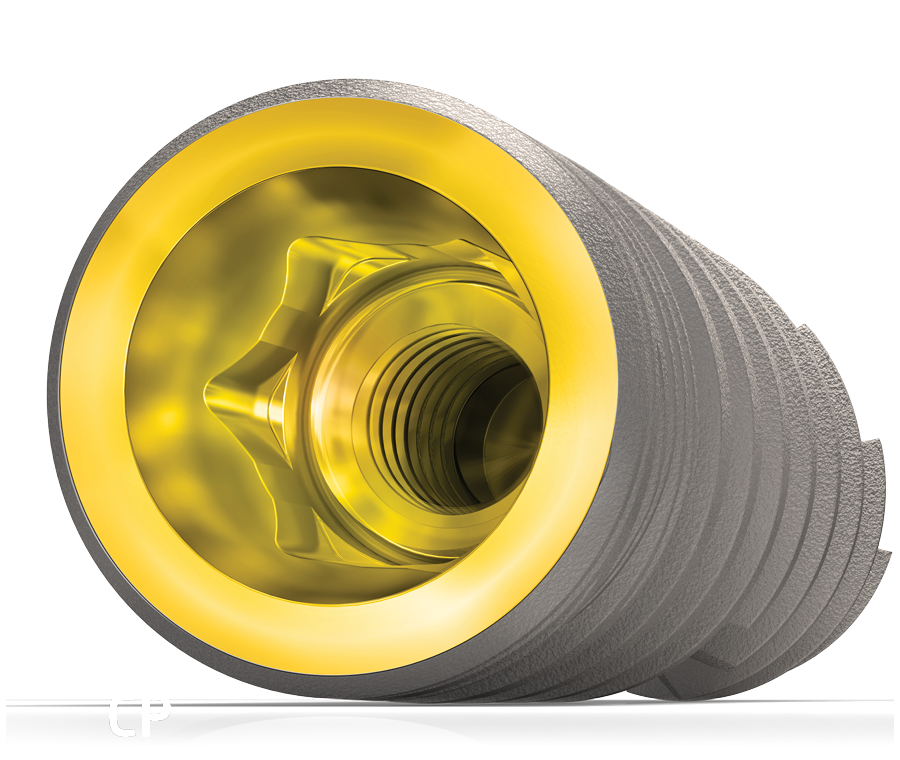
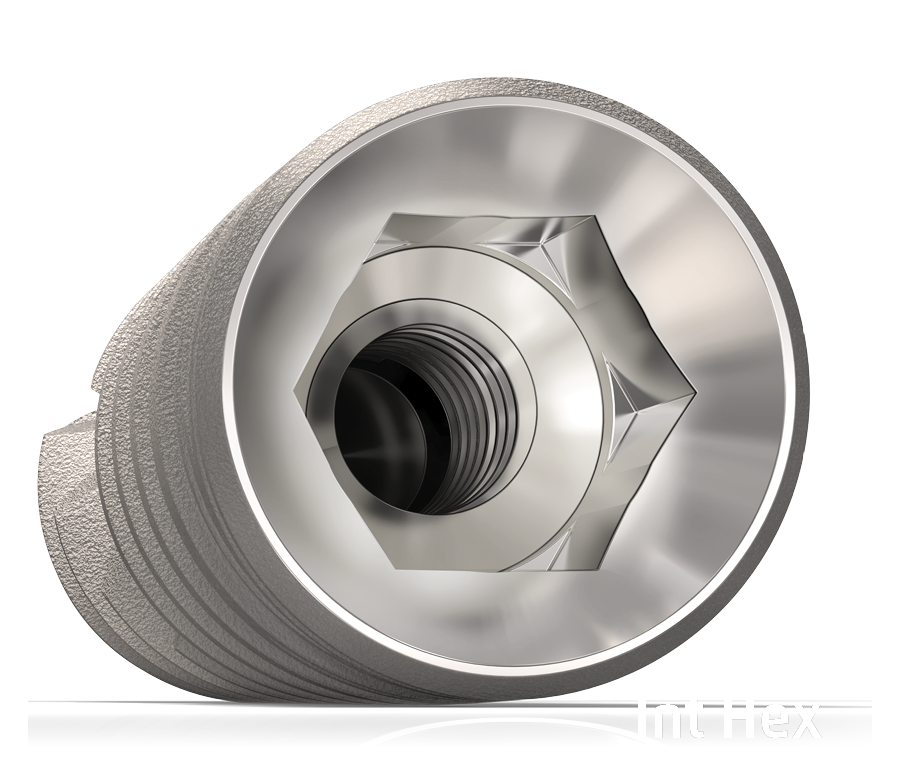
Noris EZTooth™ includes two connection concepts for single-tooth restoration: TUFF™ UniCon with a conical platform connection, and TUFF™ with an internal hex connection. The page presents both under one clinical philosophy for case-based selection.
What is the difference between the conical and internal hex options in EZTooth™?
The TUFF™ UniCon option is described as a precision-engineered conical platform intended to improve mechanical stability, load distribution, and long-term bone and soft-tissue preservation. The TUFF™ internal hex option is presented as a clinically validated connection concept offering mechanical reliability, restorative flexibility, and predictable workflows.
What are the clinical advantages of TUFF™ UniCon for single-tooth restorations?
The page highlights several advantages for TUFF™ UniCon, including connection stability, bone preservation, soft tissue control, and prosthetic precision. It also states that the conical connection creates a secure, sealed interface that helps minimize micro-movement.
What are the clinical advantages of the TUFF™ internal hex implant system?
The page describes the TUFF™ Int Hex system as offering proven reliability, restorative flexibility, clinical predictability, and workflow compatibility. It is also presented as being compatible with a wide range of prosthetic solutions and both conventional and digital treatment approaches.
Does Noris EZTooth™ support digital workflows?
Yes. The page explicitly states that the restorative ecosystem can be digital or conventional, and it also highlights compatibility with digital workflows, including access to CAD/CAM Libraries.
Are there dedicated drilling and restoration protocols for EZTooth™?
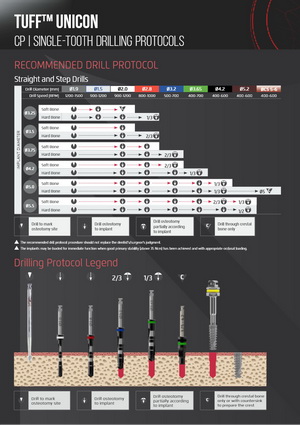
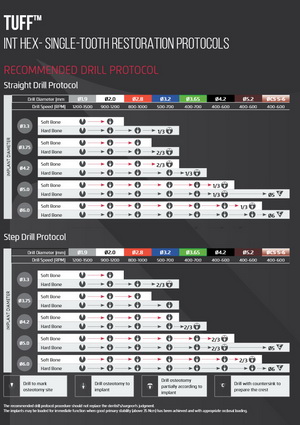
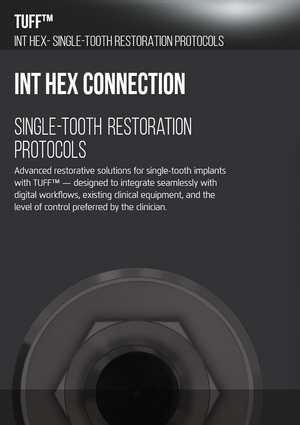
Yes. The page includes dedicated resources for both connection types, including CP | Single-Tooth Drilling Protocols, CP | Single-Tooth Restoration Protocols, Int Hex | Single-Tooth Drilling Protocols, and Int Hex | Single-Tooth Restoration Protocols.
Who is Noris EZTooth™ designed for?
The page positions EZTooth™ as a solution developed for clinicians who want a more integrated, predictable, and practical approach to single-tooth implant therapy, combining surgical, restorative, and digital workflows in one system.